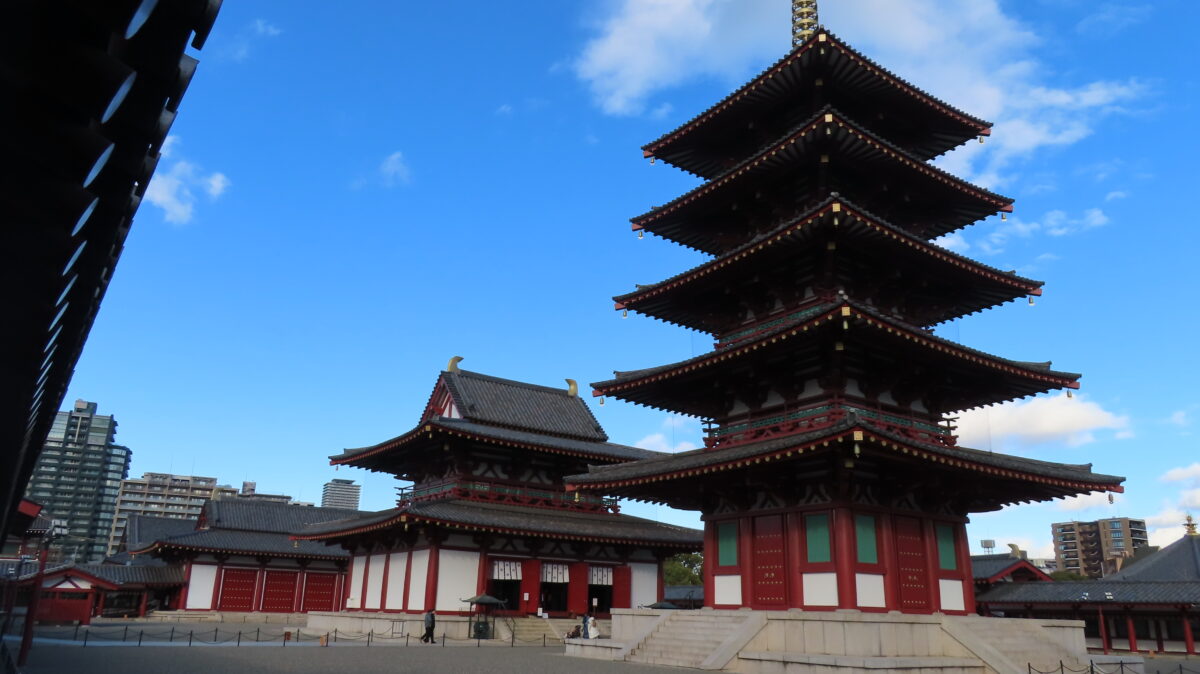
If you’re looking for a place where ancient history meets the bustling modern energy of Osaka, Shitennoji Temple is a must-visit. While many tourists flock to Dotonbori for food or Osaka Castle for history, Shitennoji offers a unique, serene atmosphere that transports you back to the 6th century.
I visited Shitennoji on a weekday in late December. While it’s famous for “Hatsumode” (the first temple visit of the New Year), a weekday visit allows you to explore the vast grounds at your own pace, feeling the spiritual weight of the Asuka period without the crowds.
The Legacy of Prince Shotoku: What Makes Shitennoji Special?
Located in the heart of Tennoji, Osaka, Shitennoji was founded in 593 by Prince Shotoku. It holds the title of Japan’s oldest “Kanji”—a temple officially established by the state.
The temple was built to honor the Shitenno (the Four Heavenly Kings) after Prince Shotoku’s victory in a pivotal battle. For over 1,400 years, despite fires and wars, the temple has been meticulously rebuilt to preserve its original layout, making it a symbol of resilience and faith for the people of Osaka.
Must-See Spots: From Grand Gates to Sacred Statues
1. The Majestic Gates: Nandaimon and Saidaimon
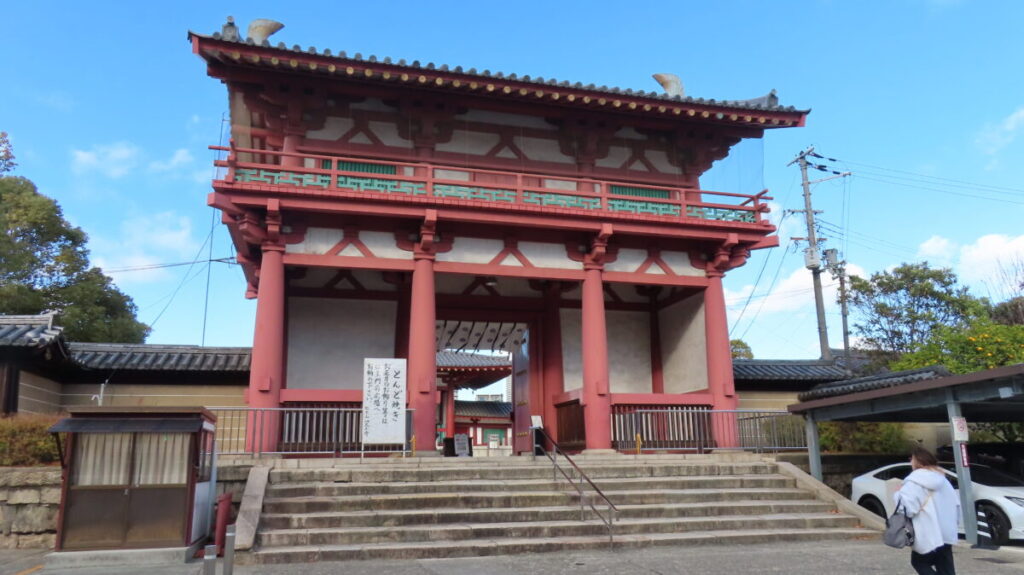
The Nandaimon (South Grand Gate) is the formal entrance, located about a 12-minute walk from JR Tennoji Station. However, don’t miss the Saidaimon (West Grand Gate). I actually doubled back just to see it!
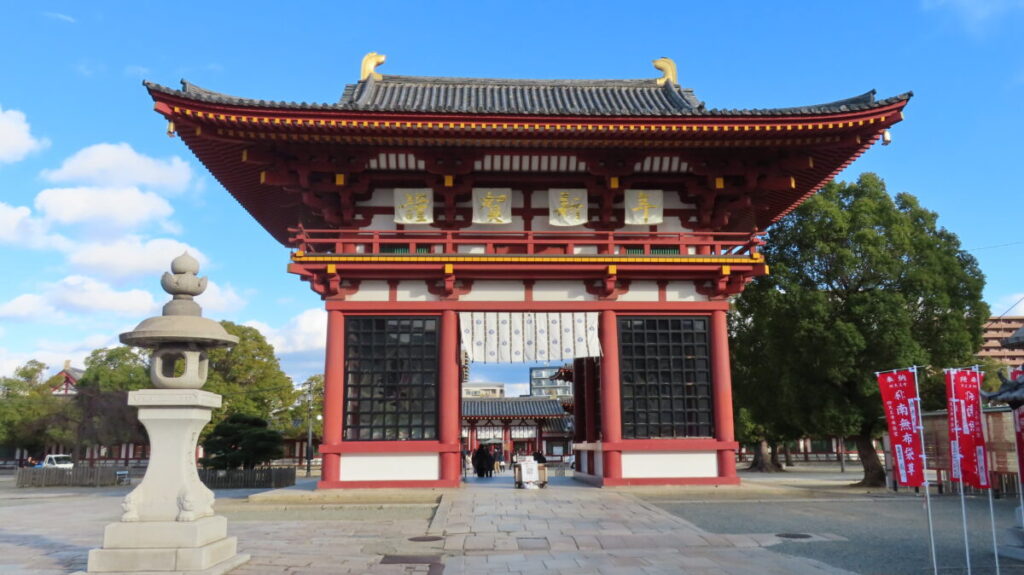
Next to the Saidaimon stands the Ishidorii (Stone Torii Gate). Seeing a Torii at a Buddhist temple might surprise you, but it’s a beautiful reminder of the era when Shinto and Buddhism were practiced together. It is symbolically regarded as the “East Gate of the Pure Land.”
2. Chumon (Middle Gate) and the Guardian Deities
The Chumon is guarded by two fierce Kongo Rikishi statues. A fun personal tip: there are offertory boxes in front of both statues. I couldn’t help but feel that offering to only one might be “unfair,” so I made sure to place a coin in both!
The Central Complex (Chunshin Garan): A Step Back in Time
To truly experience Shitennoji, you must enter the Central Complex (Admission: 500 yen). This area features the iconic “Shitennoji-style Layout,” where the major buildings are aligned perfectly from south to north.
Climbing the Five-Story Pagoda
The symbol of the temple is the 39-meter tall Five-Story Pagoda. Unlike many other temples, you can actually climb to the top here via a spiral staircase!
Note: Photography is prohibited inside, and you must carry your shoes in a bag provided at the entrance. The climb is narrow but the view of the grounds is worth it.
The Kondo (Main Hall) and Kodo (Lecture Hall)
Inside the Kondo, you can view the Kyuse Kannon Bosatsu and magnificent Buddhist murals. The Kodo houses massive statues of the Eleven-faced Kannon and Amida Nyorai. The quiet, incense-filled atmosphere here is incredibly grounding.
Modern Meets Traditional: Making Offerings via PayPay
One of the most surprising updates at Shitennoji is the introduction of cashless offerings. While temples are ancient, Japan is slowly embracing technology!
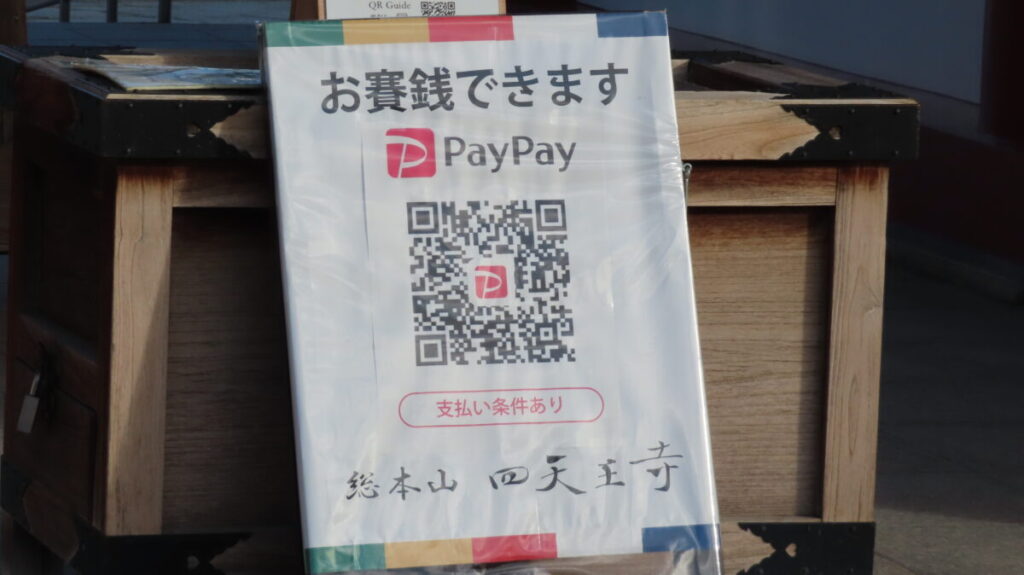
I tried it myself, and I loved the message on the screen: “Sent my feelings.” It’s a convenient option if you’ve run out of 5-yen coins, though not every hall has a QR code yet.
Practical Information for Visitors
| Address | 1-11-18 Shitennoji, Tennoji-ku, Osaka |
| Opening Hours | 8:30 AM – 4:30 PM (Apr-Sep) / 4:00 PM (Oct-Mar) |
| Admission | Garan: 500 yen / Garden: 300 yen |
| Access | 5-min walk from Shitennoji-mae Yuhigaoka Stn (Tanimachi Line) |
Pro-Tip: If you want to see the Gokuraku-jodo Garden, arrive early! I unfortunately arrived just after it closed at 4:00 PM. Also, check out the flea markets on the 21st and 22nd of every month for a lively local experience.
Summary
Shitennoji isn’t just a tourist spot; it’s a living piece of Japanese history. Whether you are climbing the pagoda, admiring the architecture, or trying out a digital offering, this temple provides a peaceful escape from the neon lights of Osaka. Make sure to add it to your Osaka itinerary!