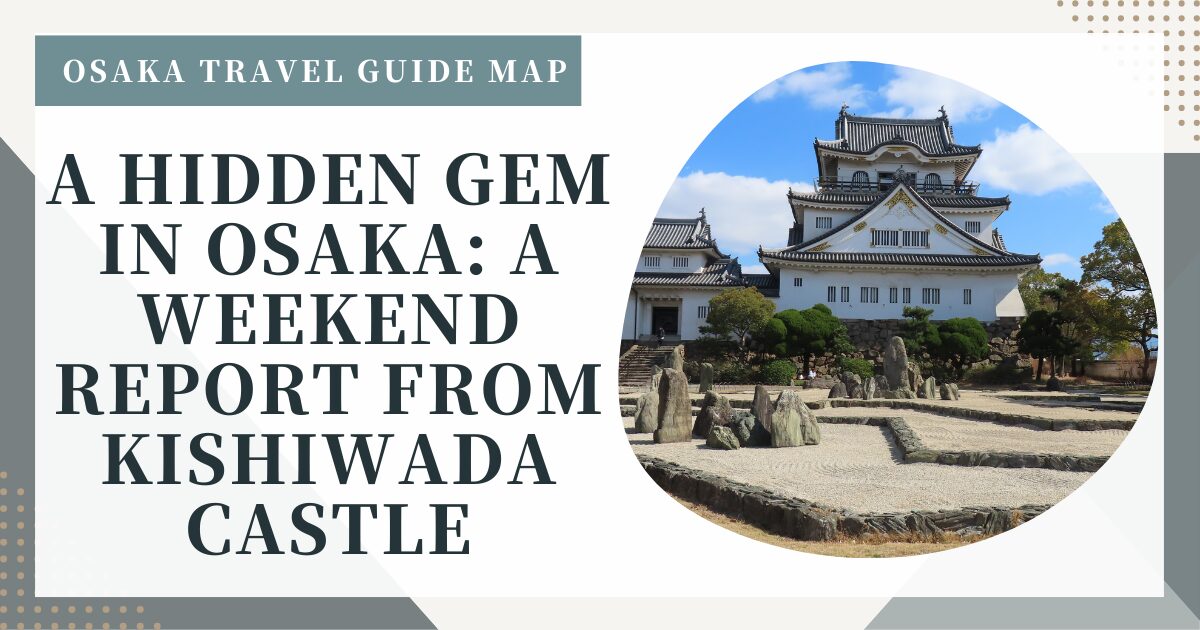
Hello, good morning, good afternoon, or good evening to you all. I’m “Traveling Cat Uncle,” a solo-style traveler who finds joy in exploring the road less traveled.
When people in Osaka hear the name “Kishiwada,” most immediately think of the brave and intense “Danjiri Matsuri” (float festival). To be honest, I was one of them. However, on a whim last Sunday, March 8, 2026, I visited Kishiwada Castle and had a quiet, enriching, and “chic” experience that completely flipped my image of the area.
In this report, I’ll share the hidden charms of Kishiwada Castle—a place I highly recommend not only for history buffs but also for mature travelers who want to avoid the crowds and enjoy some slow, quality time.
- 1. What is Kishiwada Castle? The Romance of the “Chikiri-jo” Nickname
- 2. The Main Attraction: Be Blown Away by the Modern Beauty of the “Hachijin-no-niwa” Garden
- 3. Feel the Spirit of the Samurai! Rare Exhibits Inside the Keep
- 4. Kishiwada Castle: Basic Info & Travel Tips
- Conclusion: A Peaceful Moment in an Osaka “Hidden Gem”
1. What is Kishiwada Castle? The Romance of the “Chikiri-jo” Nickname
The history of Kishiwada Castle is long, dating back to 1334 when it was first built by Wada Takaie, a relative of the famous loyalist Kusunoki Masashige. During the Sengoku (Warring States) period, it served as a base for Toyotomi Hideyoshi’s conquest of Kishu. In the Edo period, the Okabe clan ruled this land as lords for 13 generations.
This castle has a lovely nickname: “Chikiri-jo” (Chikiri Castle). It is said to be named after the “Chikiri,” a part of a weaving loom, because the castle’s layout resembled its shape. Today, because of the name’s pronunciation—”Chikiri” sounds like “Chigiri” (to make a vow)—it is secretly gaining popularity as a “power spot” for matchmaking and good fortune. Making a wish for a good connection during a solo trip adds a nice touch to the journey, don’t you think?
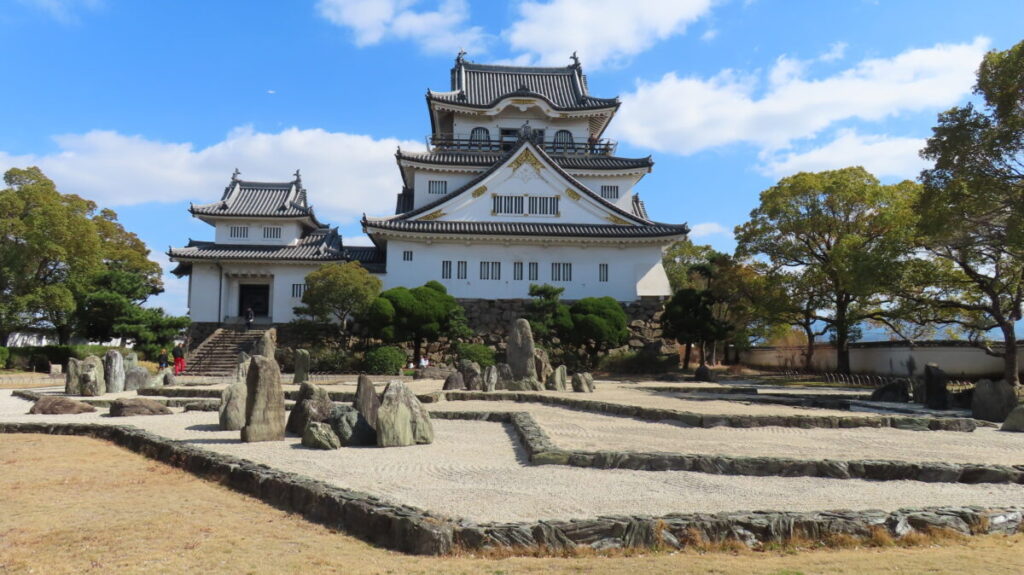
2. The Main Attraction: Be Blown Away by the Modern Beauty of the “Hachijin-no-niwa” Garden
What makes Kishiwada Castle decisively different from other Japanese castles is the “Hachijin-no-niwa” (Eight Trigrams Garden) spread out right in front of the main keep. Usually, castle gardens are “stroll gardens” centered around a pond, but this is a stunningly modern dry landscape (Karesansui) garden made of sand mounds and rock formations.
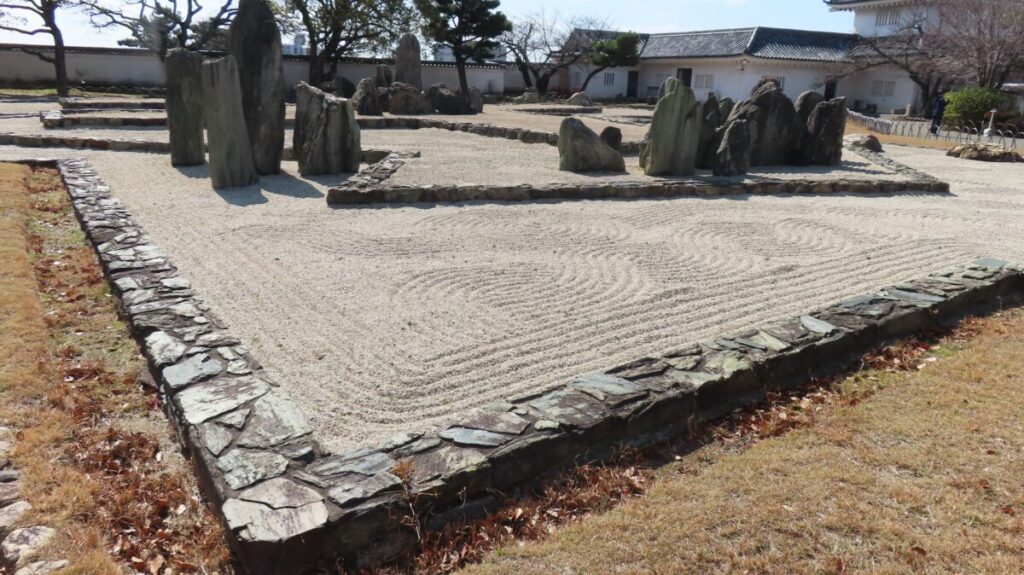
This garden was designed by Mirei Shigemori, a master landscape architect representing the Showa era. His design, which blends traditional techniques with geometric modernism, creates an atmosphere that makes you feel the air change the moment you step in.
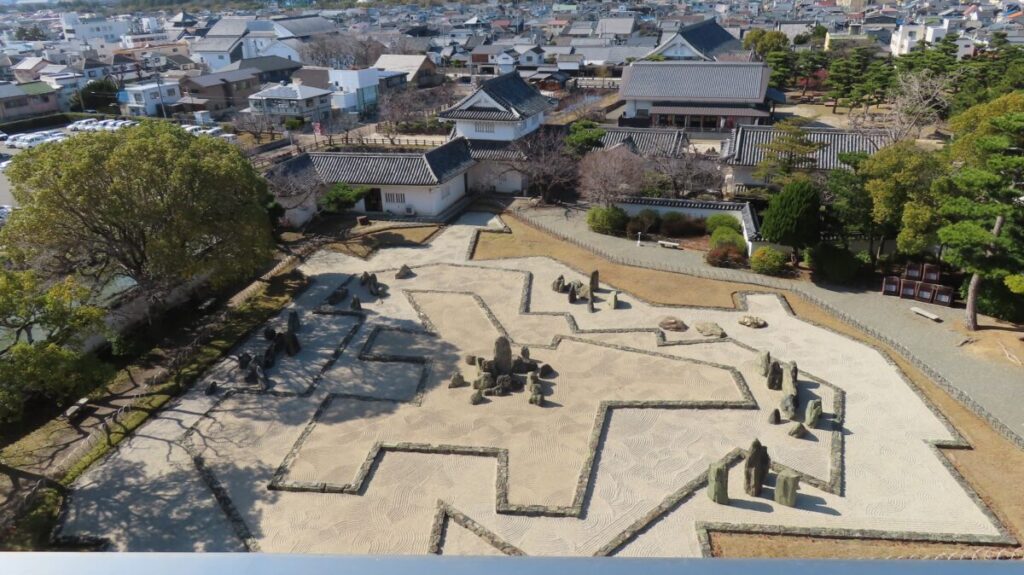
【A Must-See】 A Piece of “Art” Completed by Looking Down from the Keep
The garden is impressive from the ground, but you absolutely must climb the castle keep. When viewed from above, the arrangement of the “General” (center) and the various formations, based on Zhuge Liang’s “Eight Formations” battle strategy, comes into clear focus.
【Cat Uncle’s Monologue】
The beauty is flawless from every angle. I doubt there’s anywhere else in Japan where you can look down at such an avant-garde garden from a traditional castle tower. I lost track of time just staring at the curves of the sand patterns.
Broad Views of Osaka Bay Beyond!
The appeal of the keep isn’t just the garden. From the top floor, you can enjoy a 360-degree panoramic view. Since there are few tall buildings nearby, you can clearly see the sparkling blue Osaka Bay just by raising your eyes.
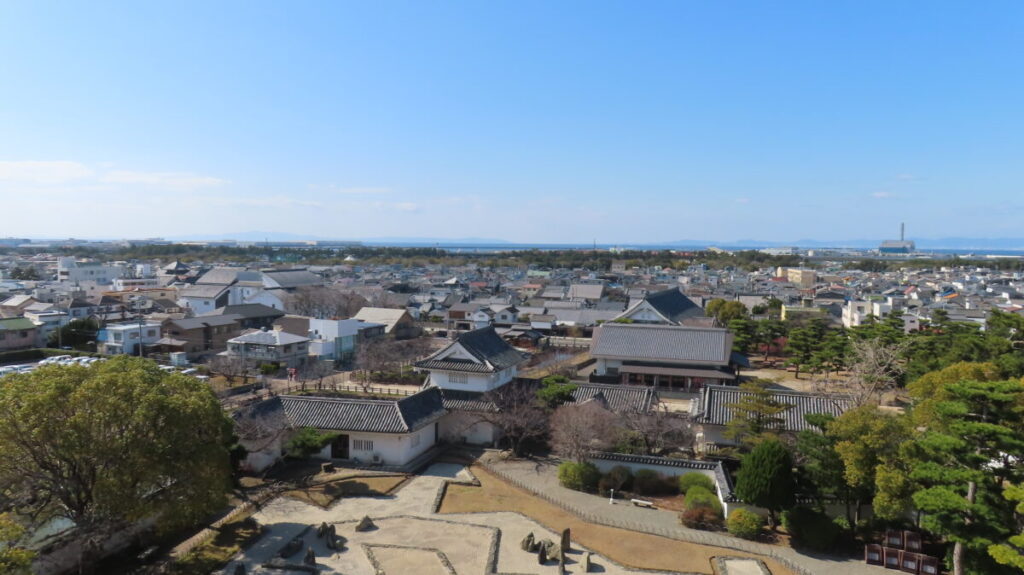
On the day I visited, the weather was great, and I could even faintly see the Akashi Kaikyo Bridge. Feeling the sea breeze while reflecting on history… this is the true essence of solo travel.
3. Feel the Spirit of the Samurai! Rare Exhibits Inside the Keep
The interior serves as a museum, displaying items related to the Okabe family of the Kishiwada Domain. What particularly caught my eye was the row of Samurai Armor (Katchu). The weight of the actual artifacts and the intensity of the warriors who lived through the warring periods were palpable, making me instinctively straighten my posture.
While many exhibits are “no photography,” there were some rare items that could be photographed. One such item was this “Kago” (palanquin).
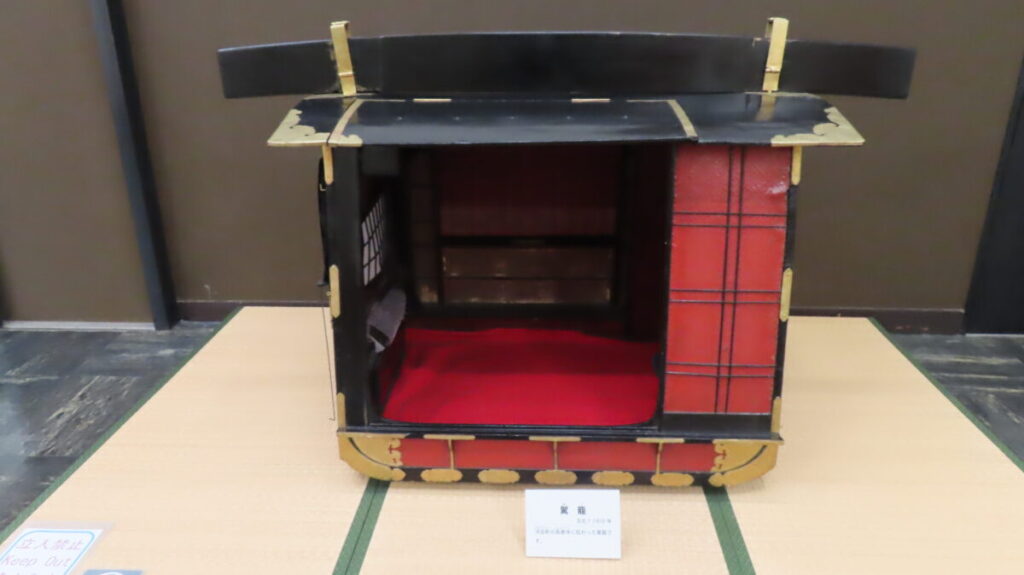
This was actually used to transport people during the Edo period. For those of us used to modern trains and cars, it’s shocking to think, “They traveled in such a compact space!” Imagining the lifestyle and physique of people back then—and the hard work of those who carried them—makes history feel much closer to home.
4. Kishiwada Castle: Basic Info & Travel Tips
Here is some information to help you enjoy your visit to Kishiwada Castle smoothly. I especially recommend using the “3-Facility Combined Ticket.”
| Address | 9-1 Kishiki-cho, Kishiwada City, Osaka |
|---|---|
| Access | Approx. 7-min walk from Nankai Line “Takojizo Station”
Approx. 15-min walk from Nankai Line “Kishiwada Station” |
| Hours | 10:00 AM – 5:00 PM (Last entry at 4:00 PM) |
| Admission | Adults: 300 yen (Free for junior high students and younger) |
| Closed | Mondays (Open if Monday is a holiday), New Year’s holidays |
【Cat Uncle’s Insider Tip】
If you have time, buy the “Kishiwada 3-Facility Combined Ticket (700 yen).” It covers Kishiwada Castle, the Danjiri Kaikan (Float Museum), and the Kishiwada Nature Museum, making it much cheaper than buying individual tickets. The powerful taxidermy displays of fierce animals at the Kishiwada Nature Museum are especially impressive and absolutely worth seeing!
Conclusion: A Peaceful Moment in an Osaka “Hidden Gem”
The greatest charm I felt visiting Kishiwada Castle was that “you can have a high-quality historical experience in surprising tranquility.”
Osaka Castle is a magnificent site, but it is always overflowing with tourists. Kishiwada Castle, on the other hand, is easily accessible—just about 40 minutes by train from central Osaka—yet it allows you to appreciate the exhibits and gardens at your own pace without the crowds.
- Want to avoid crowds and take your time with photography?
- Want to enjoy an extraordinary view on a low budget (300 yen)?
- Want to experience Mirei Shigemori’s modern art with all five senses?
Kishiwada Castle fulfills all these wishes. There are no flashy attractions, but the time spent feeling the breeze of history and gazing at the beautiful sand patterns was an irreplaceable luxury.
Why not take a little trip next weekend and spend a peaceful “adult holiday” at Kishiwada Castle?
【Nearby Spots to Visit】
The castle town area is dotted with charming “Kominka” (old traditional house) cafes. After your stroll, enjoying delicious tea in a retro atmosphere is the best. I hope you find your own favorite spot!