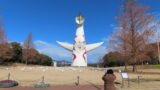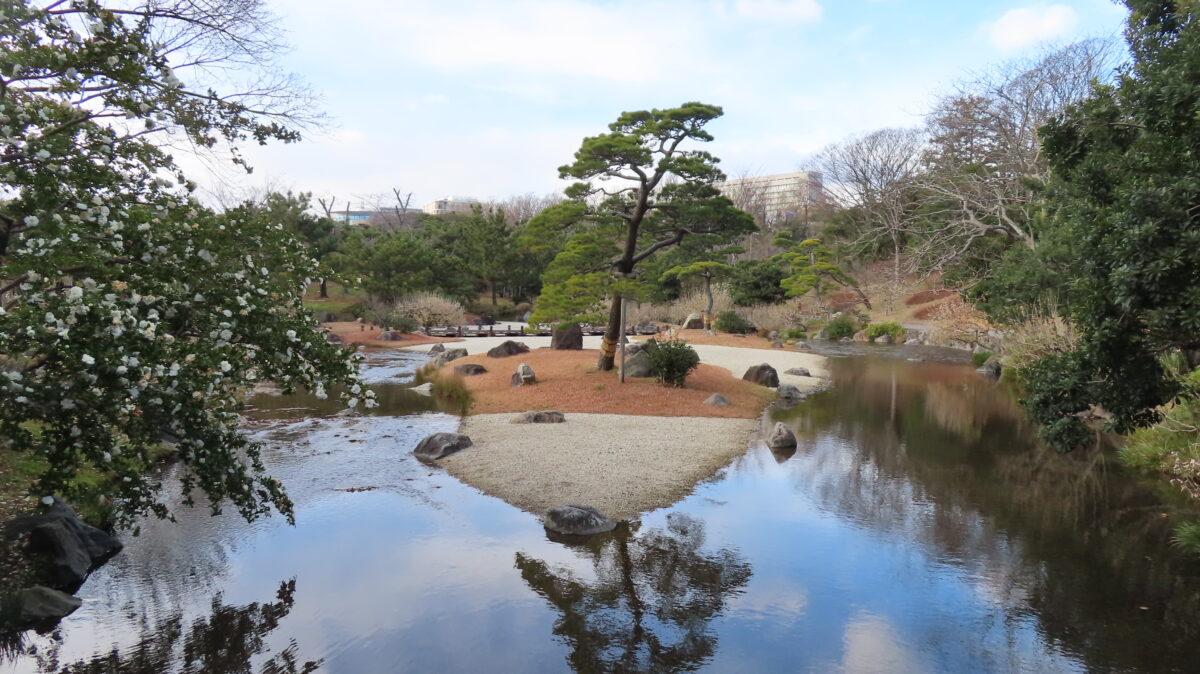
Speaking of “Expo ’70 Commemorative Park” in Suita, Osaka, the Tower of the Sun is famous. However, did you know that right on its north side lies a vast “Japanese Garden” that makes you forget the hustle and bustle of the city?
Within its overwhelming scale of 26 hectares (about 5.5 times the size of Tokyo Dome!), the essence of Japanese landscaping techniques from the Heian period to the modern era is condensed. In this article, I will report in detail on the “8 Must-See Scenic Spots” that I personally visited and was moved by on January 2, 2026, along with the latest conditions of the site.
- 1. The Symbol of the Garden! The Pinnacle of the Stroll Style: “Shinji-ike Pond”
- 2. Recreating the Beauty of the Seashore: “Matsu-no-Suhama (Pine Beach)”
- 3. Surrounded by Healing Sounds: “Bamboo Grove Path”
- 4. Symbolizing the “Flow of Time”: “Miyama-no-Izumi (Deep Mountain Spring)”
- 5. Plenty of Negative Ions! “Komorebi-no-Taki (Sunlight Waterfall)”
- 6. Reflecting the Zen Spirit: “Karesansui (Dry Landscape Garden) of Senri-an”
- 7. Enjoy Seasonal Colors: “Tsutsujigaoka (Azalea Hill)”
- 8. Nishikigoi Carp Dancing Gracefully: “Senritsu-no-Koi-ike (Melody Carp Pond)”
- Access and Basic Information for the Japanese Garden at Expo ’70 Commemorative Park
- Conclusion
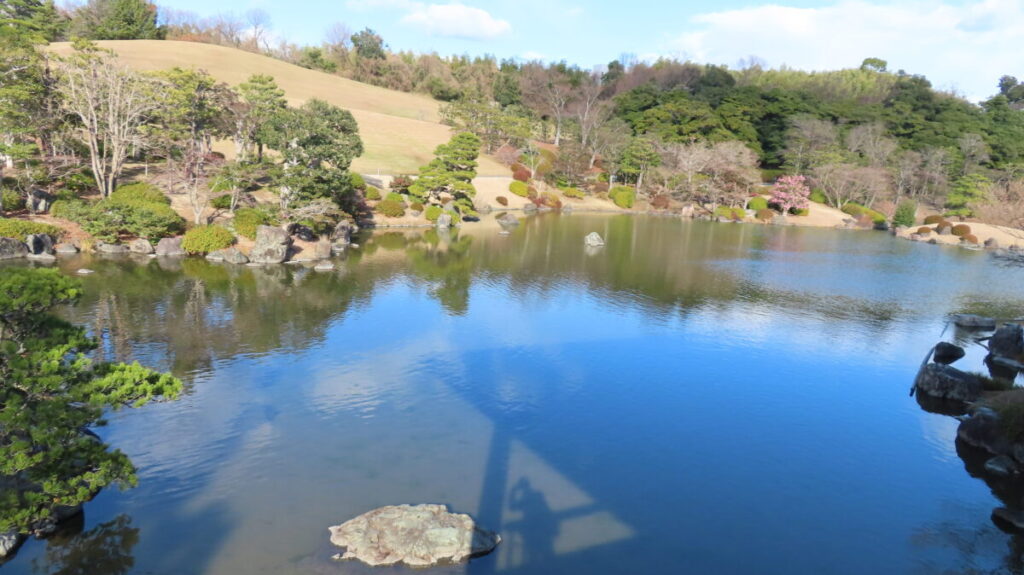
1. The Symbol of the Garden! The Pinnacle of the Stroll Style: “Shinji-ike Pond”
The first place you should visit is “Shinji-ike Pond,” located in the center of the garden. This pond, shaped like the kanji character for “heart” (心), is full of the true charm of a “stroll-style garden,” where the scenery changes dramatically depending on the angle from which you walk.
- Highlight: The contrast between the surrounding trees reflected on the water surface and the endless wide sky.
- Personal Impression: In the crisp January air, the sparkling water surface was incredibly beautiful. Just seeing this view gave me a sense of openness that made me glad I came.
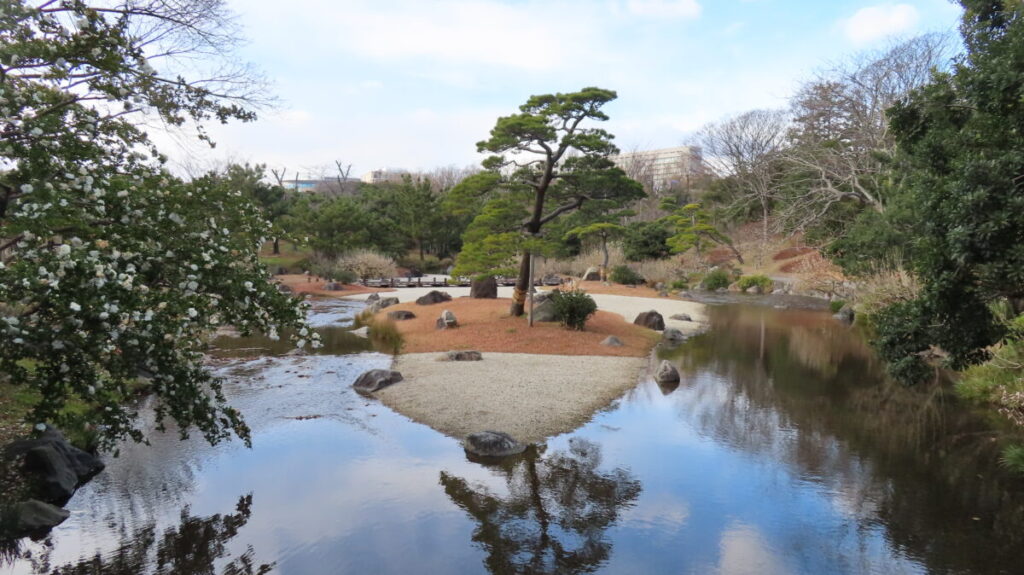
2. Recreating the Beauty of the Seashore: “Matsu-no-Suhama (Pine Beach)”
“Matsu-no-Suhama” condenses the landscape of a seashore into the garden. The world of “stillness” created by the white gravel and the green of the pines, maintained with expert craftsmanship, is truly like a single painting.
- Highlight: The minimalist beauty of curves that evokes a traditional Japanese sense of aesthetics.
- Personal Impression: Standing here, I felt a mysterious sense of calm, and my posture naturally straightened. It is also an excellent spot for photography.
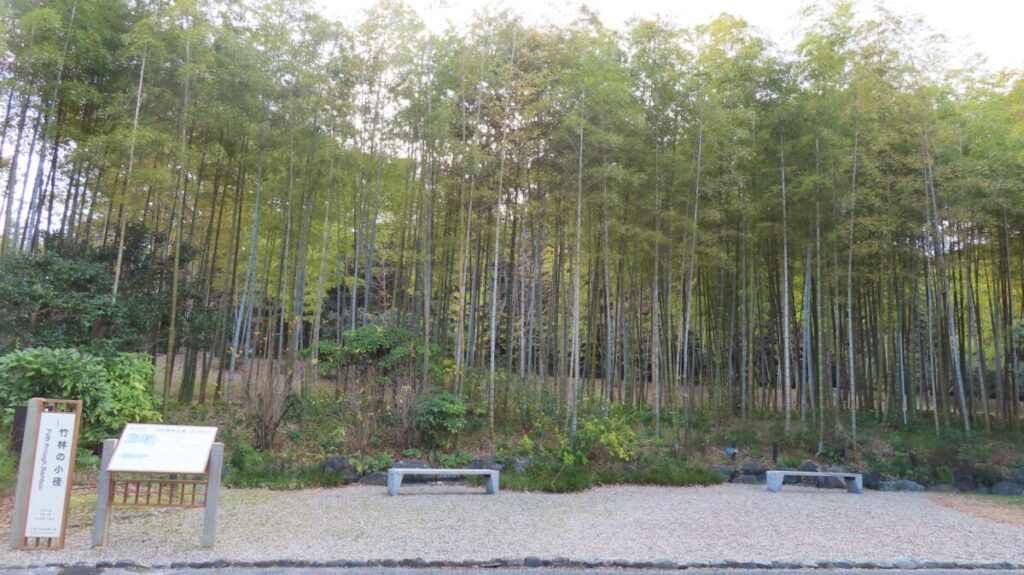
3. Surrounded by Healing Sounds: “Bamboo Grove Path”
This stunning bamboo grove area is reminiscent of Arashiyama in Kyoto. The tall bamboo stalks cover the sky, making you feel as if you have been detached from everyday life.
- Highlight: Beams of light (Komorebi) filtering through the gaps in the bamboo.
- Personal Impression: The “rustling” sound of the leaves whenever the wind blows acts as a natural BGM, healing both mind and body.
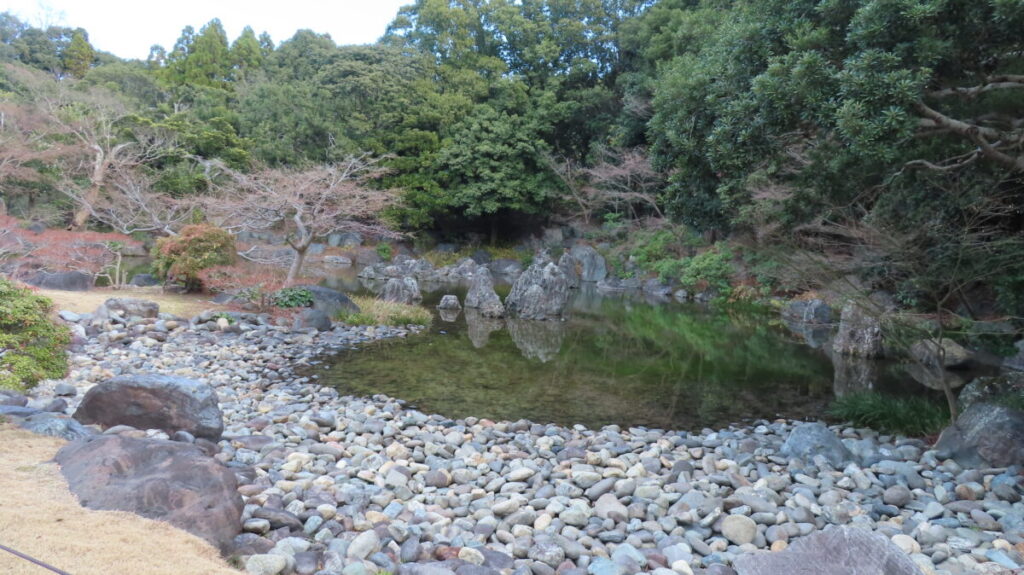
4. Symbolizing the “Flow of Time”: “Miyama-no-Izumi (Deep Mountain Spring)”
“Miyama-no-Izumi” recreates the appearance of water gushing from deep within the mountains. It is said that the water flowing from here represents the beginning of the “flow of time” in this garden.
- Highlight: The power of the water overflowing from between the rock formations and the deep surrounding greenery.
- Personal Impression: It is highly immersive, and the silence is so profound that you completely forget you are in the urban area of Osaka.
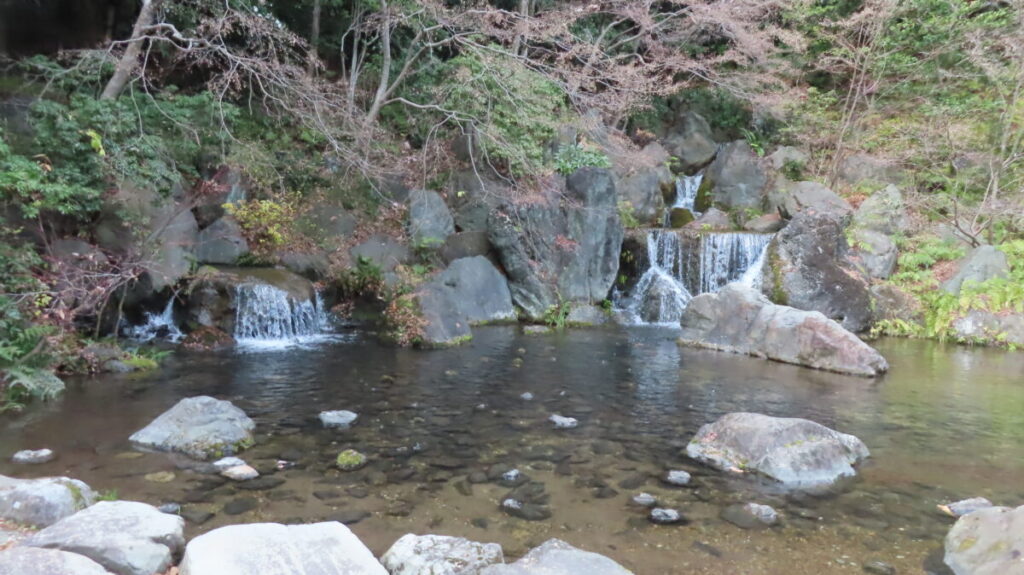
5. Plenty of Negative Ions! “Komorebi-no-Taki (Sunlight Waterfall)”
A beautiful waterfall with a significant drop appears amidst the lush trees. As the name suggests, the way light reflects off the water spray is extremely fantastical.
- Highlight: The relaxation effect of the sound of the waterfall and the clear atmosphere.
- Personal Impression: While it would be a great place to seek coolness in the summer, walking while listening to the sound of flowing water even in winter was a very luxurious experience.
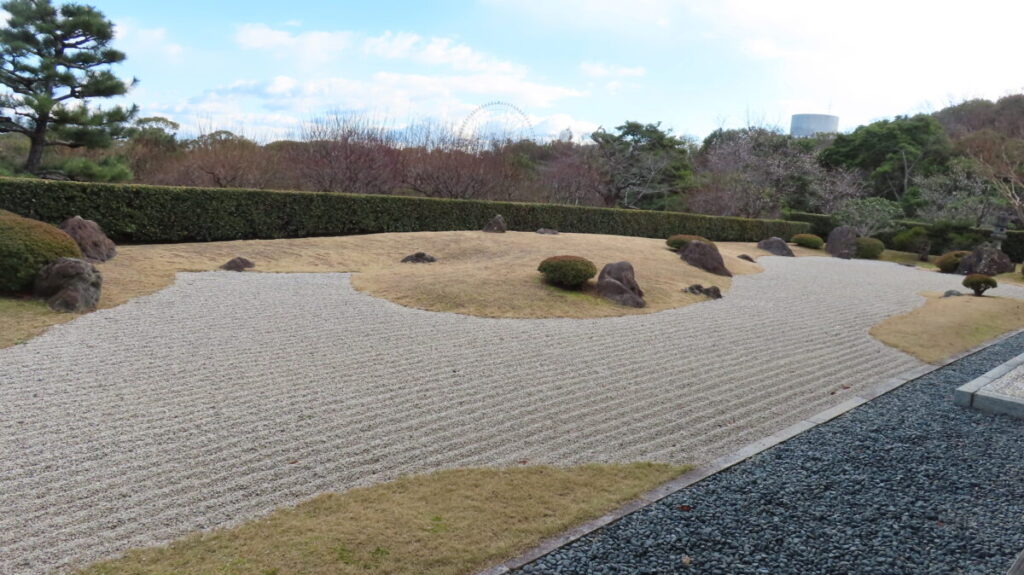
6. Reflecting the Zen Spirit: “Karesansui (Dry Landscape Garden) of Senri-an”
This is a dry landscape garden adjacent to the tea house “Senri-an.” You can enjoy the unique, stoic beauty of Japan, which expresses mountains and water using only patterns in stones and sand (Samon) without using actual water.
- Highlight: The geometric patterns drawn in the sand and the balance of the arranged stones.
- Personal Impression: This monotone world with suppressed colors is the perfect place when you want to organize your thoughts or simply face yourself in quiet contemplation.
7. Enjoy Seasonal Colors: “Tsutsujigaoka (Azalea Hill)”
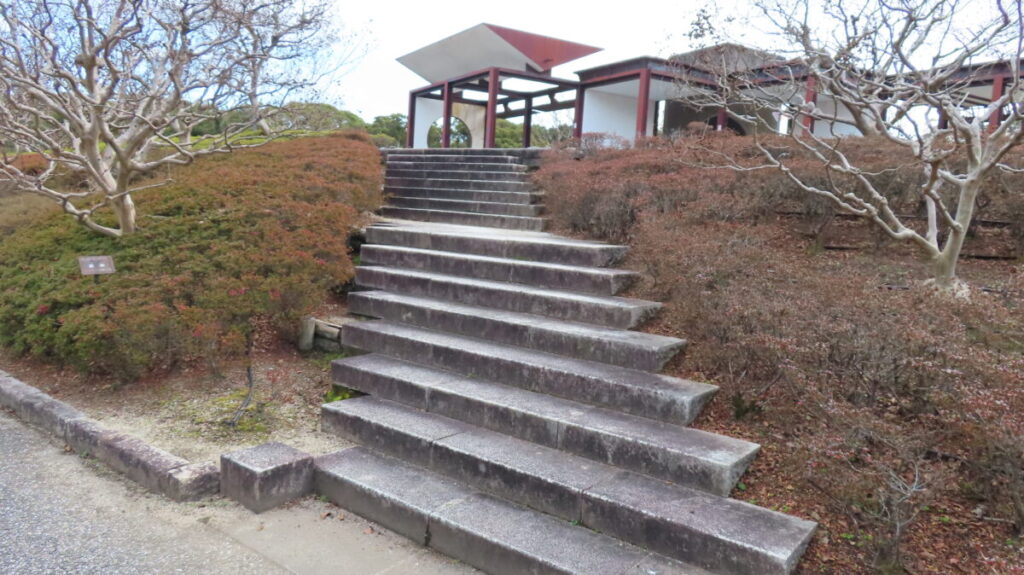
This is an area where azaleas are planted all over a gentle slope. In spring, the entire slope is dyed in pink and white, showing an overwhelming landscape.
- Best Time to Visit: Late April to early May.
- Personal Impression: This time (January) featured a quiet landscape where the green stood out, but walking while imagining the flowers in full bloom was also a pleasure. It made me want to visit again during the peak season.
8. Nishikigoi Carp Dancing Gracefully: “Senritsu-no-Koi-ike (Melody Carp Pond)”
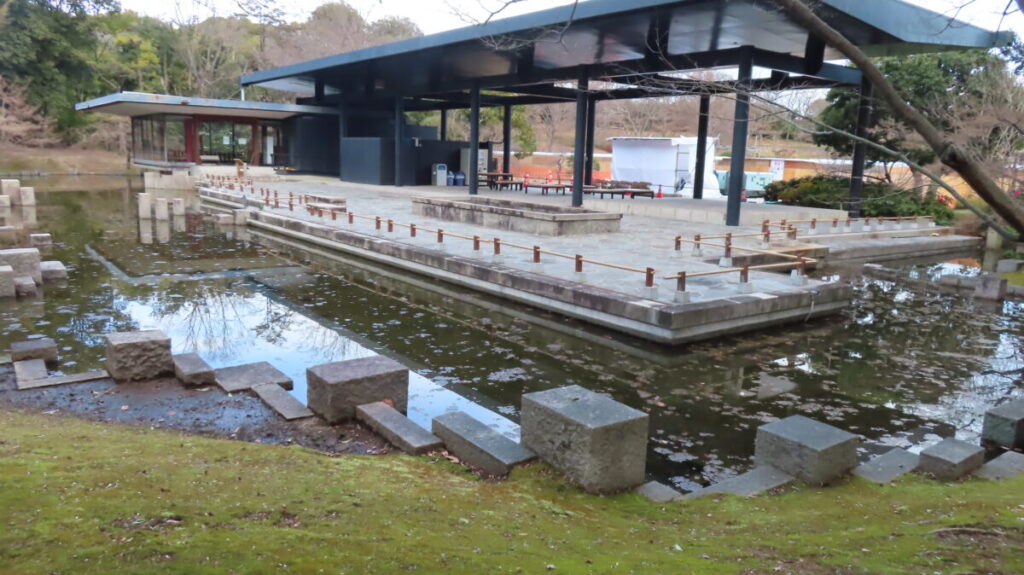
The last spot I will introduce is “Senritsu-no-Koi-ike,” where colorful Nishikigoi carp swim leisurely. This is a particularly popular spot for families with children.
【Latest Local Information: As of January 2026】
Currently, paving work is being carried out on the garden paths and the pier, and access is partially restricted. According to the sign, the construction period is until February 27, 2026. Please be careful when you visit!
- Highlight: The colorful and friendly carp that gather when they sense the presence of people.
- Personal Impression: Just looking at the ripples spreading on the water surface makes my heart feel calm. I am also looking forward to the new walkway after the construction is finished.
Access and Basic Information for the Japanese Garden at Expo ’70 Commemorative Park
For those who are planning to visit, here is a summary of useful basic information.
| Item | Details |
| Opening Hours | 9:30 AM – 5:00 PM (Last entry at 4:30 PM) |
| Closed Days | Every Wednesday (the following day if Wednesday is a holiday) / Year-end and New Year holidays *Open daily in April, May, October, and November |
| Admission Fee | Adults: 260 yen / Elementary and Junior High students: 80 yen (Very economical as it includes access to the Natural and Cultural Gardens!) |
| Access | Approx. 15-minute walk from “Bampaku-kinen-koen Station” or “Koen-higashiguchi Station” on the Osaka Monorail |
| Parking | “Nihon Teien-mae Parking Lot” is the closest and most convenient |
Tips for an Efficient Tour
Since the Japanese Garden is very large, you will get tired if you walk without a plan. I recommend a “clockwise” route.
Keeping the central “Shinji-ike Pond” on your right, visit “Matsu-no-Suhama” and the “Karesansui” on the west side first, and finally exit through the “Carp Pond” on the east side. This course allows you to follow the historical background smoothly.
【Note!】 It takes about 1 to 1.5 hours to walk the entire course slowly. Since there are gravel paths and slopes, I strongly recommend going in comfortable shoes such as sneakers.
Conclusion
The Japanese Garden at Expo ’70 Commemorative Park is not just an “old garden” but a vast work of art filled with Japanese aesthetics passed down from the Showa era to the present day. Please find your own favorite scenery in this place that changes its expression with every season.
☆Recommended reading 👇