Good morning, good afternoon, or good evening to you all. This is “The Wandering Cat Uncle,” currently obsessed with this season’s anime.
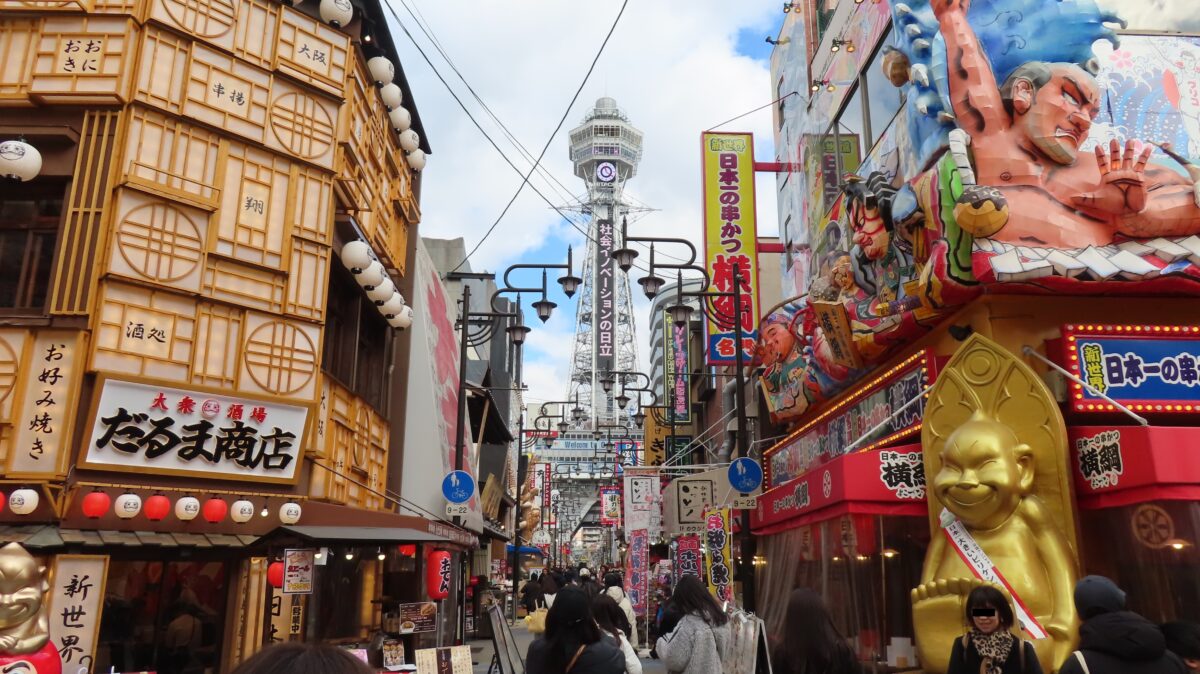
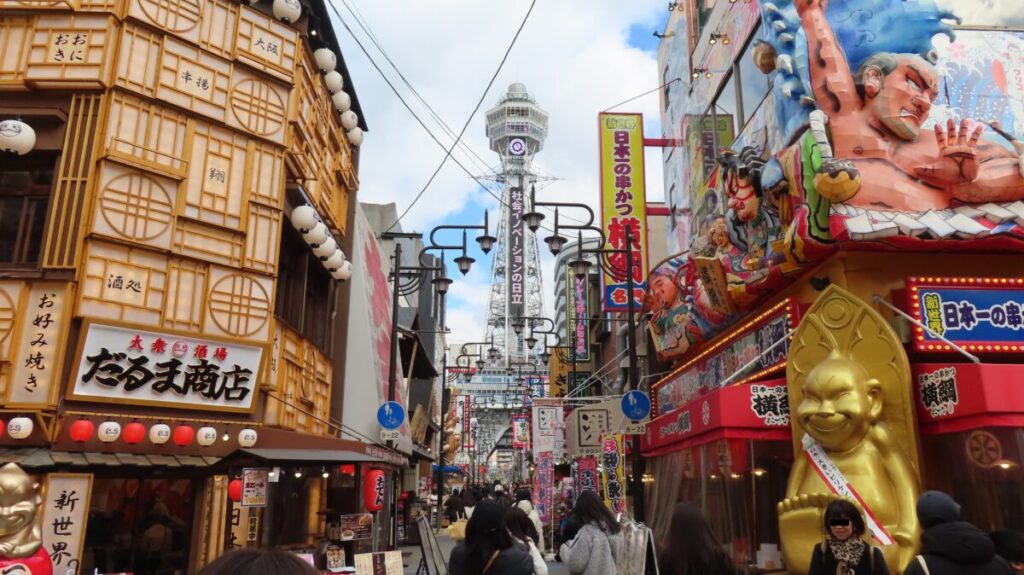
Tsutenkaku Tower, the symbol of Osaka, and the Shinsekai district sprawling at its feet. This area is known for its flashy neon signs, long queues at kushikatsu (deep-fried skewers) shops, and the latest giant slides. While it has a strong image of being loud and bustling, there is actually a quiet, profound side that can only be seen by a man in his 40s or 50s walking alone.
In this post, I’ll be sharing a mature travelogue centered on “the luxury of doing nothing”—choosing not to ride the slide and sparing my stomach by skipping the fried food. Why not join me in searching for the lingering scent of old Osaka before it gets completely overwritten as a trendy tourist spot for the youth?
- 1. Admiring Tsutenkaku as Architectural Beauty from the “Outside”
- 2. Gazing at “The Changing City, The Unchanging Self” from the Observation Deck
- 3. A Touch of Playfulness: The Glowing “Tsutenkaku Gacha” Souvenir
- 4. Tracing Memories of the Phantom “Luna Park”
- 5. The Changing Jan Jan Yokocho and the Inherited “Chic”
- 6. Take Note! Operating Days of “New Star” Smart Ball
- Rest and Practical Spots for Mature Solo Walkers
- Summary: A Journey to Find Your Own “Shinsekai”
1. Admiring Tsutenkaku as Architectural Beauty from the “Outside”
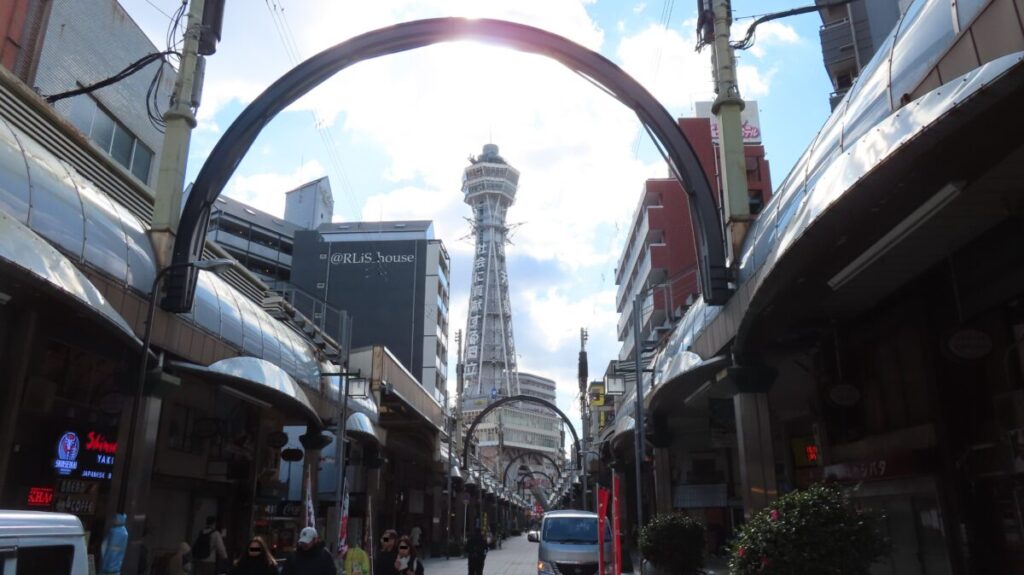
The current Tsutenkaku is the second generation. Rebuilt in 1956, this tower was designed by Tachu Naito, the “Father of Earthquake-resistant Design,” who would later design Tokyo Tower. It is also famous as one of the “Six Tower Brothers” across Japan!
While the crowds flock to the latest attractions, let’s take a moment to closely observe the functional beauty of its steel structure. You can almost feel the pride of the craftsmen who supported Japan’s rapid economic growth in the Showa era through these iron beams.
Don’t Miss the Recreated “Ceiling Painting”
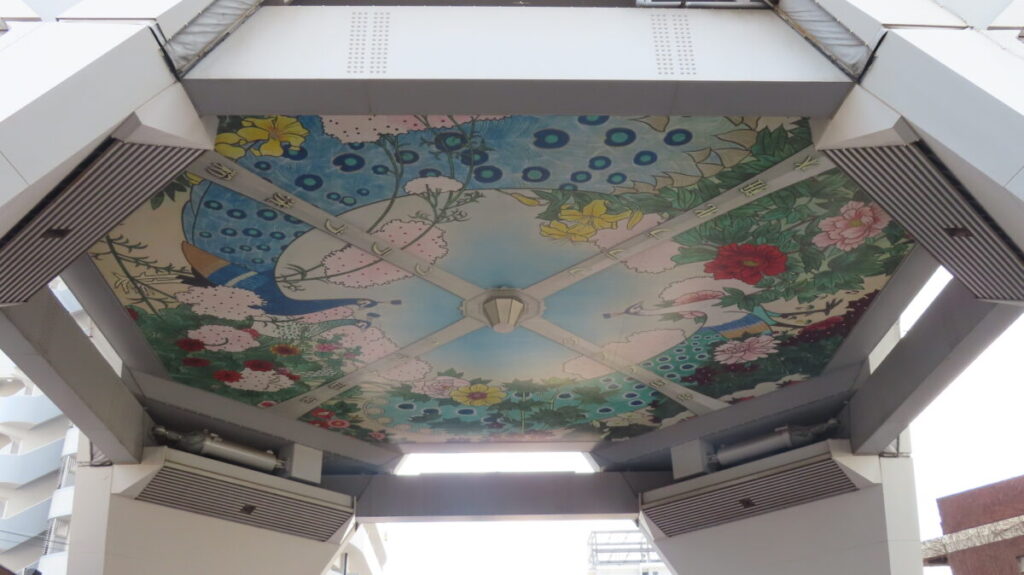
Look up at the open-air ceiling on the first floor, directly beneath Tsutenkaku. You’ll find a colorful ceiling painting there. This is a recreation of an advertisement for “Club Cosmetics” that was painted when the original Tsutenkaku was completed in 1912.
The modern design featuring peacocks and flowers tells the story of how glamorous pre-war Osaka was. Those few minutes spent looking up—even if your neck starts to ache a little—are well worth the art. This is where the journey back through Shinsekai’s history begins.
2. Gazing at “The Changing City, The Unchanging Self” from the Observation Deck
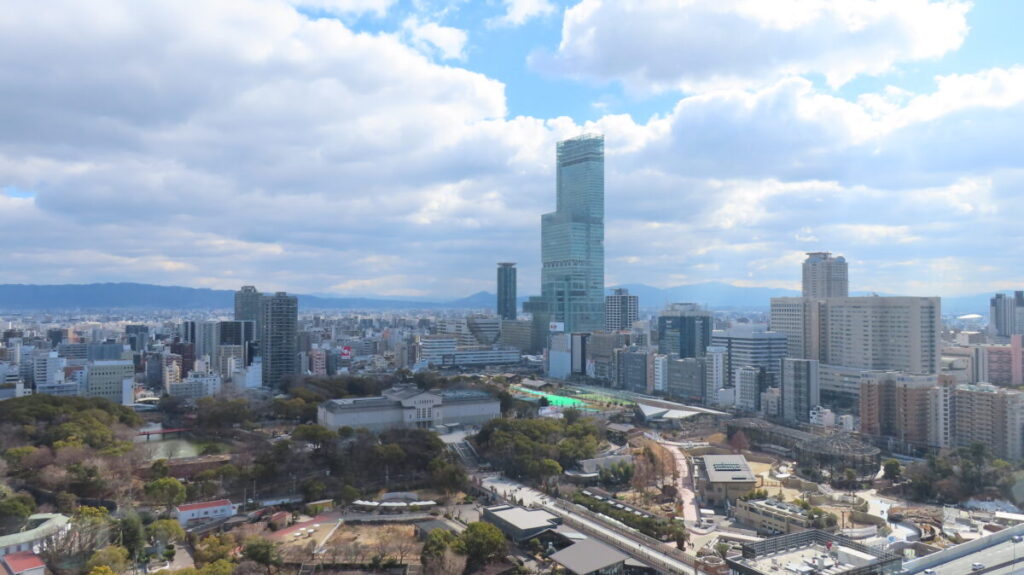
There’s no need to feel awkward about visiting the observation deck alone. In fact, this 360-degree panorama is better savored in solitude. While young tourists are busy taking selfies, we adults can reflect on “what used to be over there”… and no, it’s not because we’re lonely (laughs).
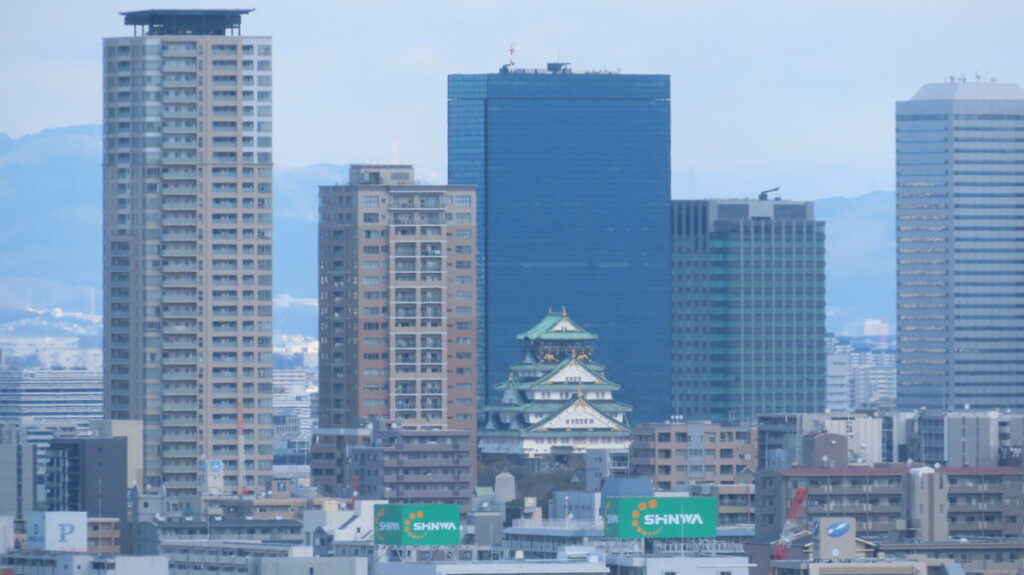
Osaka Castle: A “Hanging Garden” Blending into Skyscrapers
As someone born and raised in Osaka, I’m used to seeing Osaka Castle, but the view from here surprised me. You can’t see the greenery of the park; instead, only the main keep appears to be floating between the skyscrapers. It feels like an otherworldly scene where the “Sengoku period” has wandered into the “Reiwa era.” This is a magic trick only possible from the specific height of Tsutenkaku.
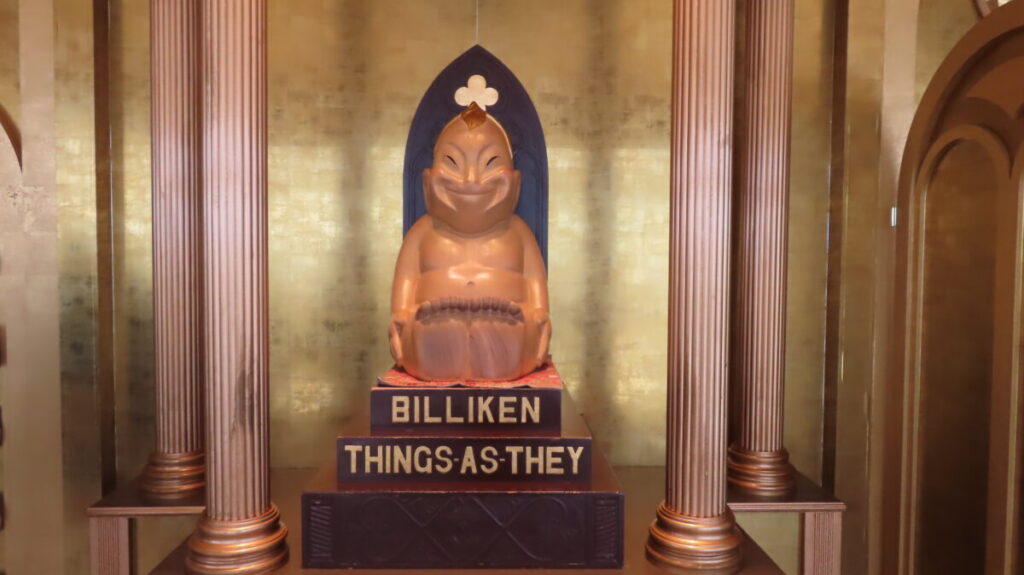
Coming Face-to-Face with “Billiken-san,” the God of Good Luck
On the 5th-floor observation deck sits the well-known god of good luck, Billiken-san. Legend has it that he was modeled after a god seen in a dream by an American female artist, making him surprisingly international. I made sure to rub the soles of his feet, which have been worn down by many hands. I did so with a bit of ulterior motive: “May my blog get more readers…” (laughs).
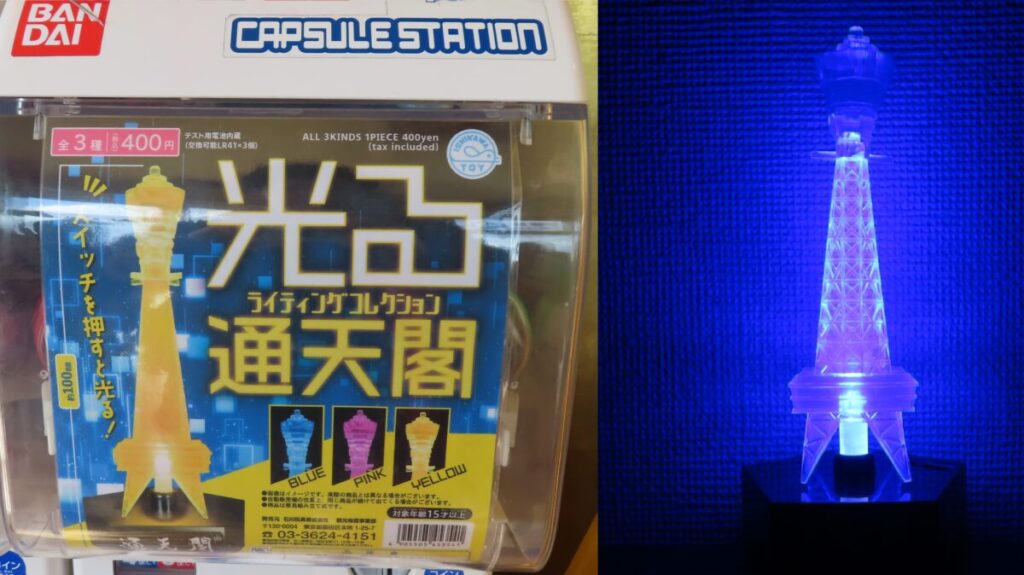
3. A Touch of Playfulness: The Glowing “Tsutenkaku Gacha” Souvenir
Inside Tsutenkaku, there are a surprising number of capsule toy (gacha) machines. My recommendation is the official “Lighting Collection Tsutenkaku” (400 yen). It comes in three colors: yellow, blue, and pink. I managed to pull a cool blue one!
When you light it up in a dark room, it’s unexpectedly beautiful. It’s the perfect “adult souvenir” to enjoy while having a drink at home and reminiscing about the streets you walked that day.
4. Tracing Memories of the Phantom “Luna Park”
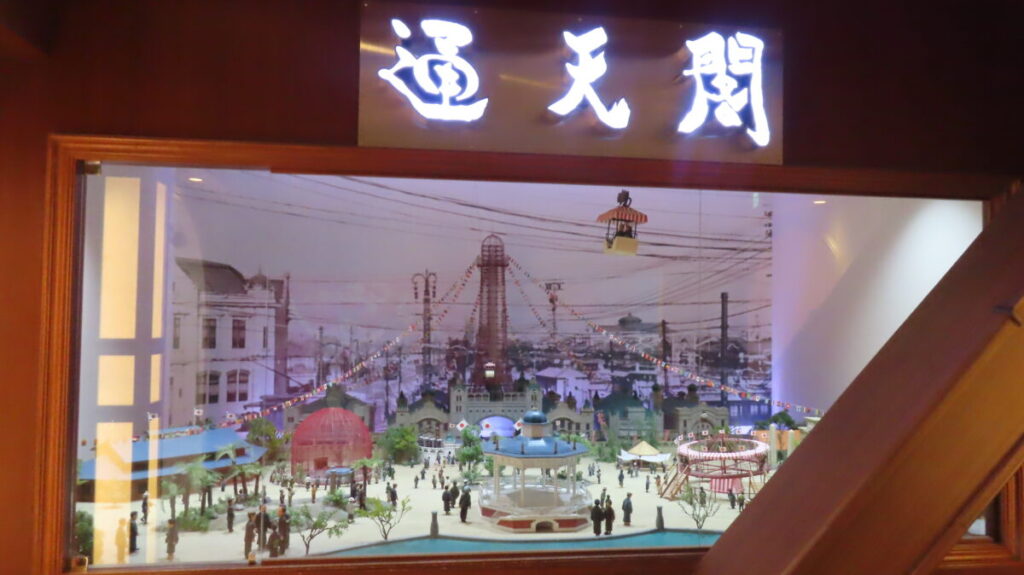
Did you know that in the late Meiji era, a massive amusement park called “Luna Park” once stood here? The Tsutenkaku of that time was a revolutionary structure, looking like a fusion of the Eiffel Tower and the Arc de Triomphe, and it was even connected to the amusement park by a ropeway.
There is a diorama of the area as it was back then displayed inside Tsutenkaku. Seeing this before you walk the streets adds a whole new layer of depth. It’s fascinating to think that the memories of the “Orient’s greatest entertainment district” dreamed of by our predecessors lie beneath the busy streets of today. Even an ordinary back alley begins to look like a gateway to history.
5. The Changing Jan Jan Yokocho and the Inherited “Chic”
South of Tsutenkaku lies the 180-meter-long “Jan Jan Yokocho.” Its name comes from the “jan jan” sound of the shamisen that used to echo here. Today, it’s filled with the cheers of tourists, but until recently, there was a place here that symbolized the “quiet” of this town.
The Famous “Shogi Club” Becomes a Kushikatsu Shop, But…
The hallmark of this alley used to be “Sankei Club,” a Shogi and Go club where you could watch serious matches through the glass. It closed its 80-year history in June 2024. However, when I visited the site… it had become a kushikatsu shop that inherited the name and the sign’s design!
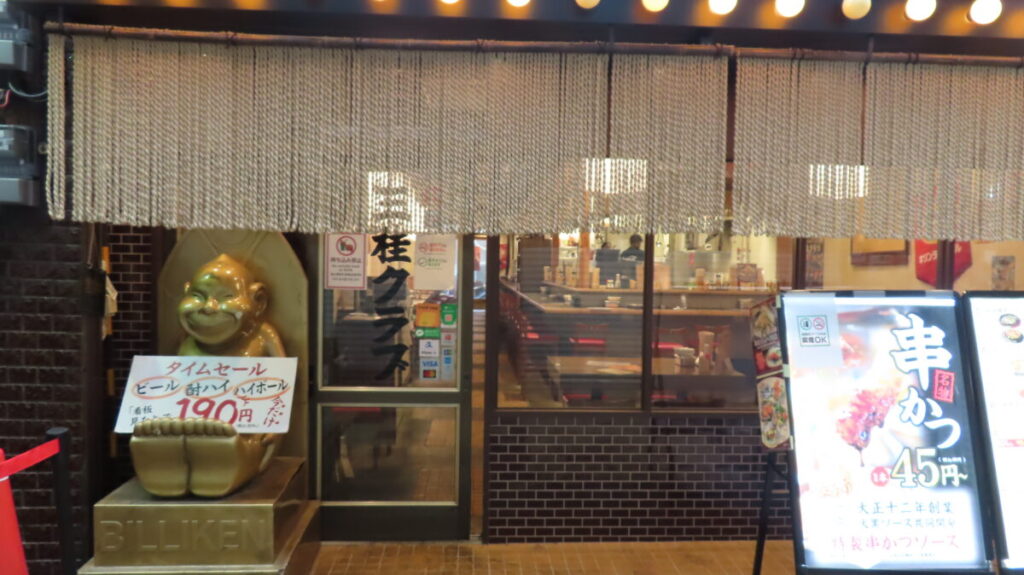
Instead of destroying the good old history, the city changes its form while preserving its memory. Quietly accepting change rather than just mourning it—perhaps that is the proper etiquette for a mature stroll.
6. Take Note! Operating Days of “New Star” Smart Ball
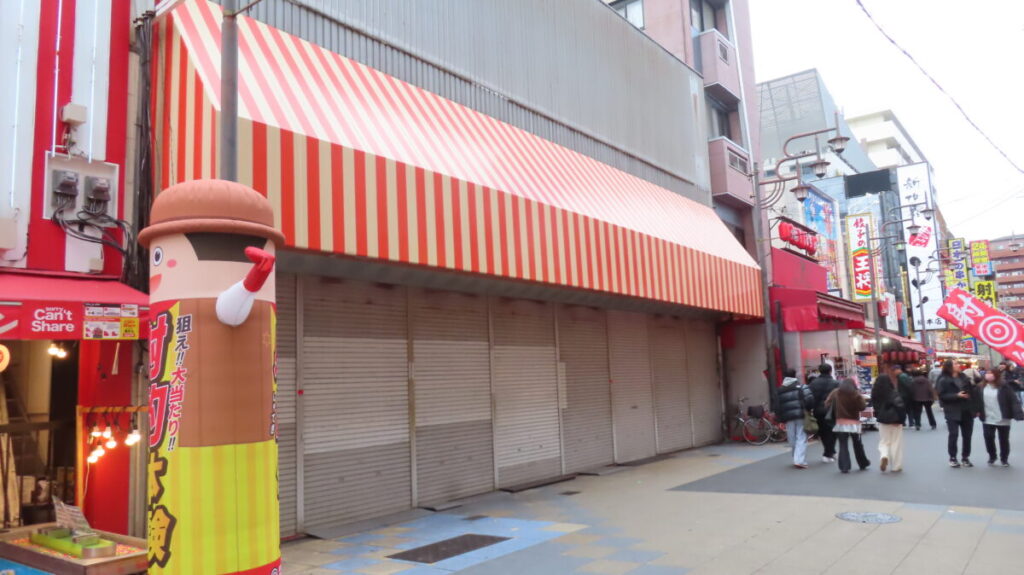
If your stomach isn’t feeling up to food, a great “play” option is the smart ball specialist “New Star.” It’s a playground strictly for adults (under 18s not allowed). It’s the pinnacle of Showa retro fun for just 100 yen, but you need to be careful when visiting.
Unfortunately, it was closed on the day I visited. Even if Google Maps says “Open,” they actually have irregular holidays (about 6 times a month). It was closed during my visit on Tuesday, February 7, 2026, so if this is your main goal, calling ahead is best.
Rest and Practical Spots for Mature Solo Walkers
- Tennoji Park (Tenshiba): A 5-minute walk from Tsutenkaku. If you get tired of the crowds, come here. There are many free benches where you can refresh yourself just by sitting and looking at the sky.
- Lockers at Ebisucho Station: Traveling light leads directly to a relaxed mind. The trick is to leave heavy bags at the station and walk with just a camera.
- Restroom Info: The public toilets in “Tenshiba” are very clean. The Shinsekai entertainment district has many old toilets, so it’s safer to know the clean spots in advance.
Summary: A Journey to Find Your Own “Shinsekai”
Shinsekai is a fascinating town even if you don’t scream on flashy attractions or eat dozens of kushikatsu skewers. Tracing architectural history, cherishing lost landscapes, and experiencing small joys and sorrows over a single smart ball. This “luxury of doing nothing” is a pleasure you can only truly appreciate as you get older.
On your next day off, why not visit Tsutenkaku alone to breathe in the deep atmosphere of Osaka? There, you’ll likely find your own “Shinsekai” (New World) that isn’t listed in any tourist guidebook.
Tsutenkaku Basic Information
- Address: 1-18-6 Ebisuhigashi, Naniwa-ku, Osaka City, Osaka
- Access: 3-min walk from Osaka Metro Sakaisuji Line “Ebisucho Station,” 10-min walk from Midosuji Line “Dobutsuen-mae Station”
- Hours: 10:00 AM – 8:00 PM (Last entry 7:30 PM)
- Official Website: https://www.tsutenkaku.co.jp/