Happy New Year! On January 2nd, I kicked off 2026 with a visit to the iconic Expo ’70 Commemorative Park (Banpaku Kinen Koen) in Suita City, Osaka. With the upcoming Expo 2025 Osaka, Kansai, there’s no better time to revisit the site where it all began.
This vast 260-hectare park was developed on the former site of the 1970 Japan World Exposition. It’s more than just a park; it’s a harmonious blend of history, avant-garde art, and seasonal nature. In this guide, I’ll share the highlights from my New Year’s walk and some practical tips for your visit.
1. The Tower of the Sun: A 70-Meter Masterpiece
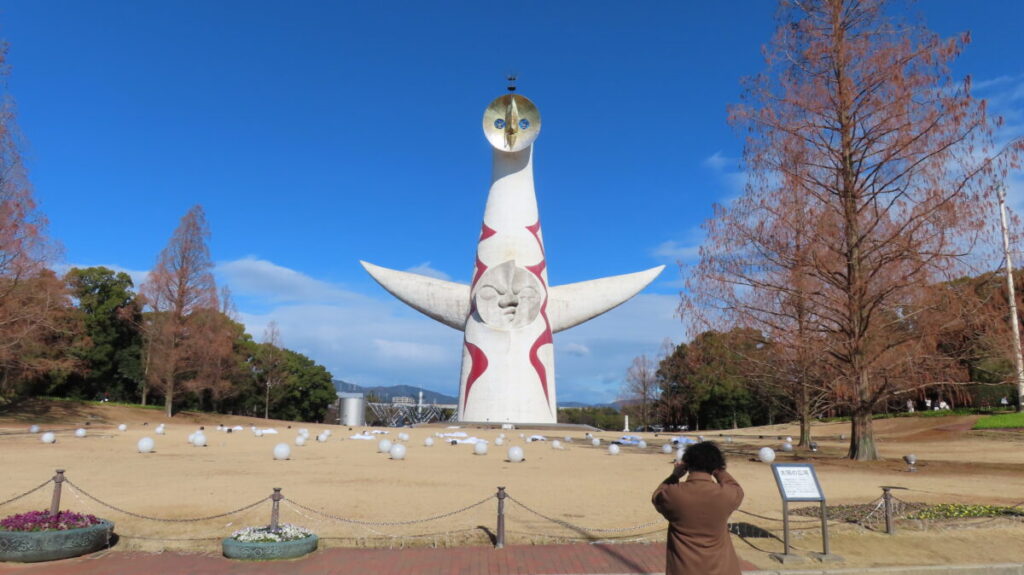
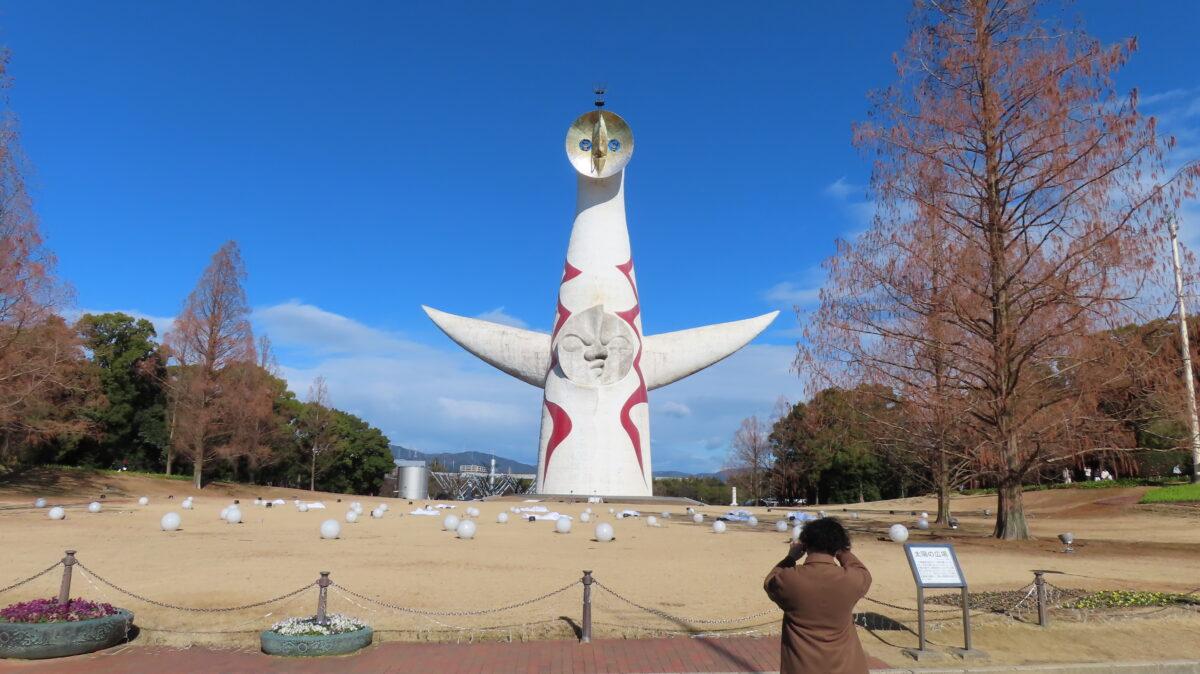
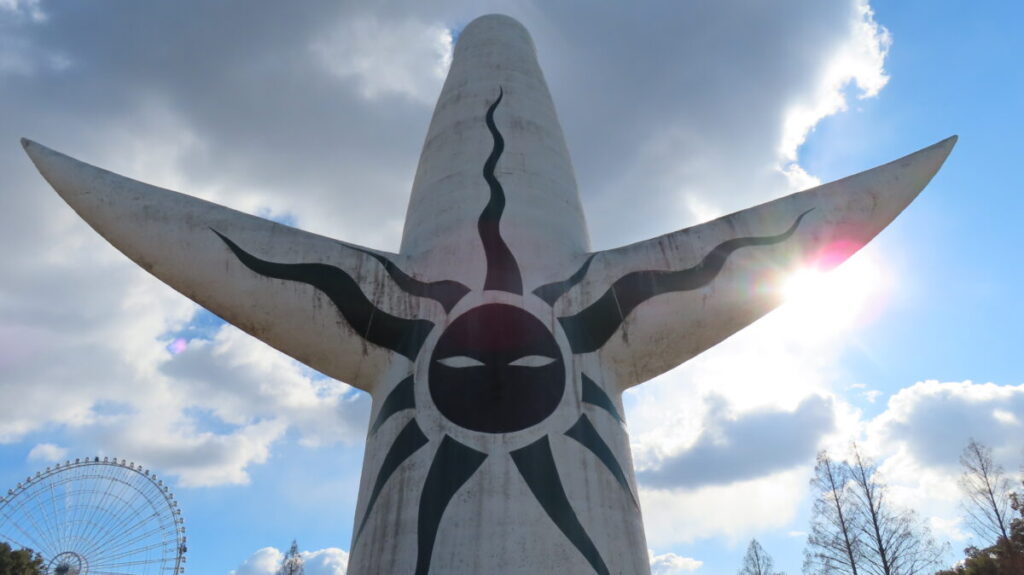
The moment you enter through the Central Gate, you’re greeted by Taro Okamoto’s Tower of the Sun. Standing 70 meters tall, this massive structure remains the soul of the park even 50 years after the Expo.
Pro Tip: Internal exhibits (featuring the “Tree of Life”) require an advanced reservation. If you plan to go inside, be sure to book via the official website weeks in advance, as slots fill up quickly!
The tower features three faces: the “Face of the Sun” (Present) on the front, the “Golden Face” (Future) at the top, and the “Black Sun” on the back representing the Past. Seeing the “Black Sun” in person is a reminder of the depth of Okamoto’s philosophy.
2. EXPO’70 Pavilion: Relive the Nostalgia
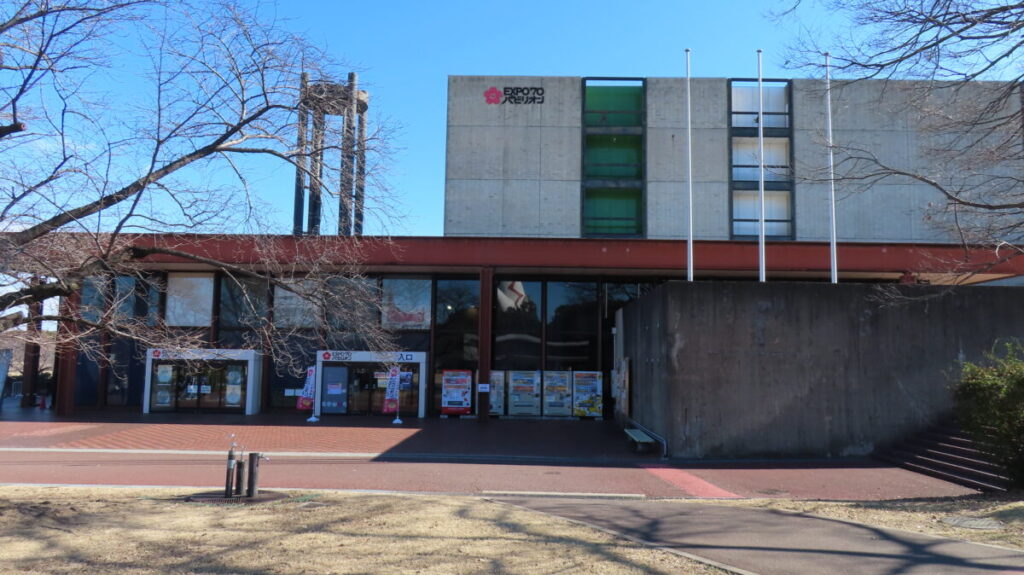
Located a 5-minute walk from the tower, the EXPO’70 Pavilion is a must-visit for history buffs. This museum is housed in the original “Steel Pavilion” from the 1970 Expo.
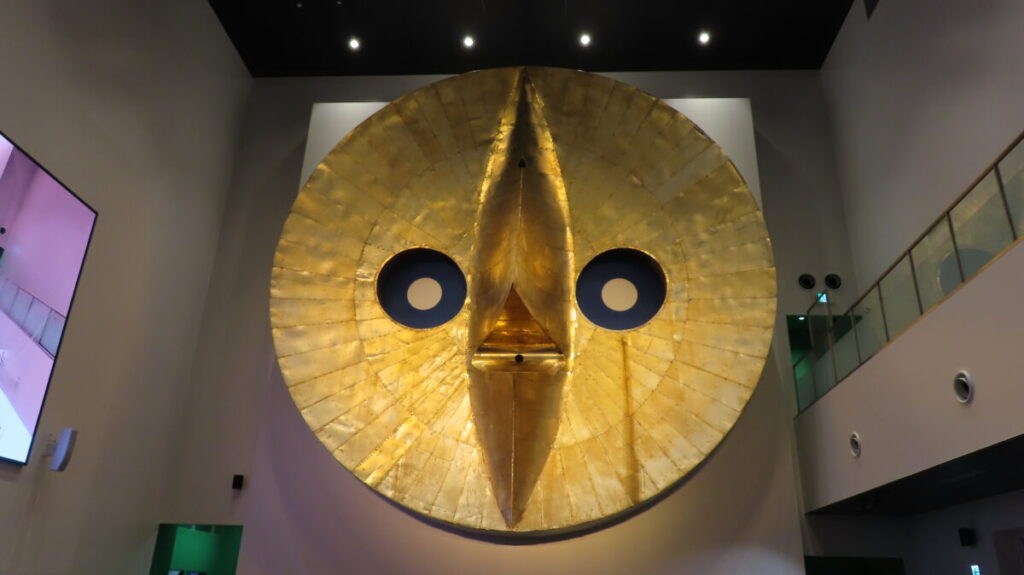
The absolute highlight is the “Original Golden Face” displayed in the annex. Getting up close to this artifact—which once sat atop the tower—reveals its staggering scale and weathered texture. It really puts the “world” in World Exposition into perspective.
- Admission: 500 yen (High school students and above)
- Junior High & Under: Free (when accompanied by a guardian)
3. Seasonal Beauty: Rose & Japanese Gardens
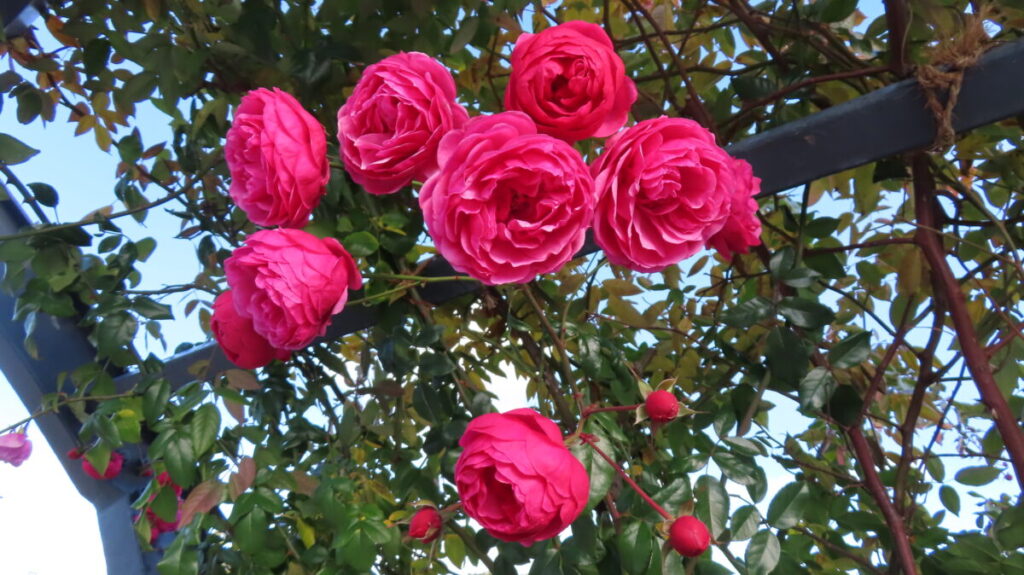
Even in the dead of winter, the park offers serene beauty. The Peace Rose Garden houses roughly 2,400 rose bushes. While the peak seasons are Spring (May-June) and Autumn (October-November), I was surprised to find a few resilient blooms even on January 2nd!
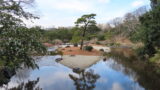
The Japanese Garden, located to the north, is a 26-hectare masterpiece built to showcase Japanese landscaping to the world. It’s a “strolling pond garden” that offers a meditative escape from the city’s noise.
4. Local Flavors: Trying “Yoshitako” Takoyaki
No trip to Osaka is complete without Takoyaki. Right near the Central Entrance, you’ll find “Yoshitako,” a shop run by the “Takoyaki Club” of Yoshimoto Kogyo (Japan’s famous comedy agency).
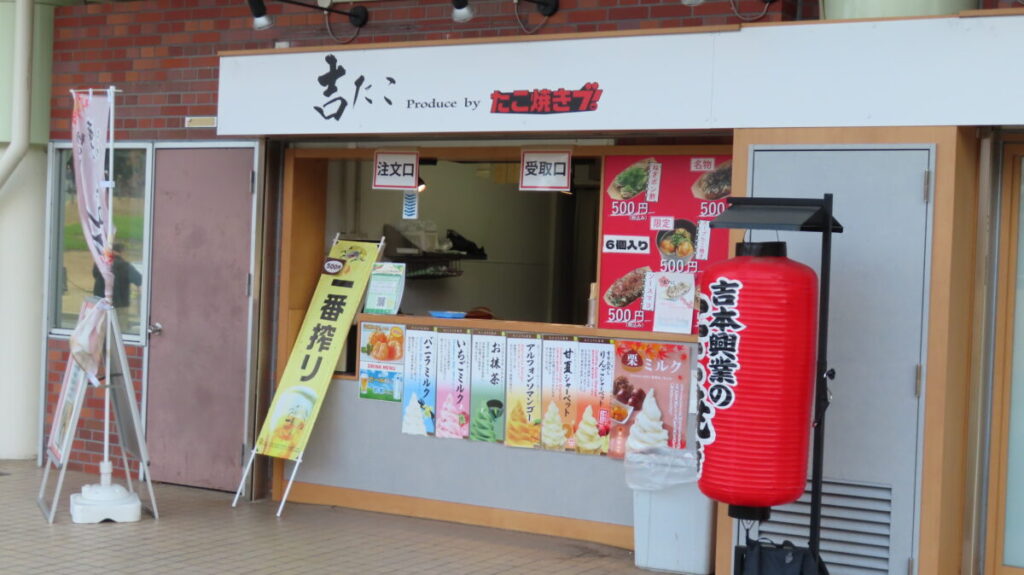
I tried the Sauce & Mayo version—at 500 yen for 6 pieces, it’s a perfect, reasonably priced snack to fuel your walk. The atmosphere is lively, often featuring themes related to famous Japanese comedians.
Visitor Information & Access
Admission Fees (Park Entry)
| Category | Fee |
|---|---|
| Adults (Ages 15+) | 260 yen |
| Elementary/Jr. High | 80 yen |
| Preschoolers | Free |
※The admission fee is scheduled to be revised during fiscal year 2026 to 450 yen for adults, with free admission for elementary and junior high school students.
How to Get There
- By Monorail: Just outside “Bampaku-kinen-koen Station” or “Koen-higashiguchi Station.” This is the easiest way from Senri-Chuo or Osaka Airport.
- By Car: Accessible via the Suita Interchange. Note that parking (approx. 4,000 spaces) fills up quickly on weekends.
Summary: A Timeless Osaka Landmark
Expo ’70 Commemorative Park is a rare place where 1970s retro-futurism meets 21st-century nature. Whether you’re here for the art of Taro Okamoto or a quiet stroll through the Japanese Garden, it offers a refreshing change of pace from central Osaka.
Have you ever visited the Tower of the Sun? Let me know your favorite spot in the comments below!
☆Recommended reading 👇